English
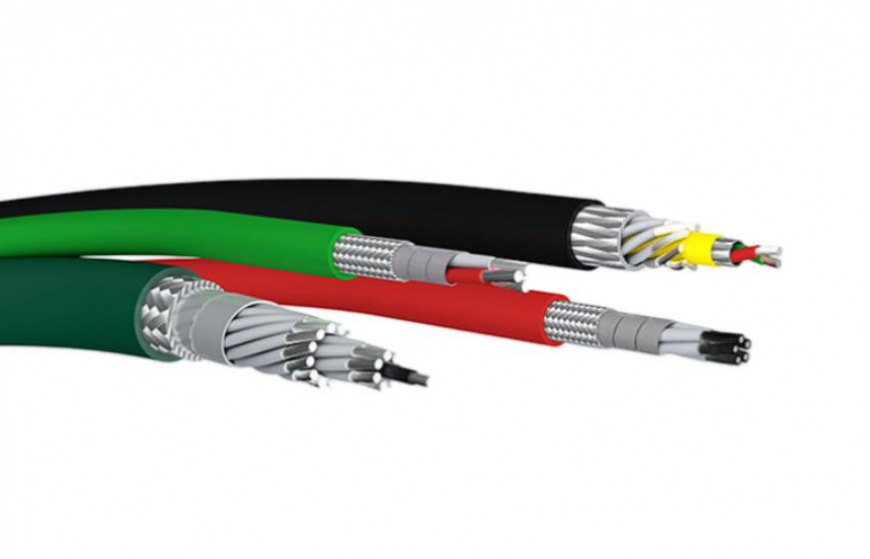
Railway locomotive and vehicle cables
Railway Rolling Stock Cable
Product Introduction
Railway rolling stock cables are dedicated wiring cables installed inside EMUs, high-speed trains, locomotives, subways and light rails, categorized into power supply cables, control cables and shielded signal cables. Rated voltages range from 300/500V, 0.6/1kV to 1.8/3kV and 3.6kV. They comply with China railway industry standards TB/T 1484, GB/T 12528, and European international standards EN 50264, EN 50306, EN 45545. The mainstream model is WDZ-DCYJ series. Customized for harsh onboard conditions including continuous vibration, drastic temperature variation, oil and fuel contamination, narrow-space bending and strict fire safety requirements in enclosed carriages, these cables adopt tinned flexible copper conductors combined with electron-beam irradiated cross-linked LSZH flame-retardant polyolefin insulation and sheath. Integrated with vibration resistance, extreme temperature adaptability, oil & fuel resistance, low-smoke zero-halogen flame retardancy and anti-electromagnetic interference performance, they serve as core supporting cables for power supply and control systems of rail transit vehicles.
Internal Structure
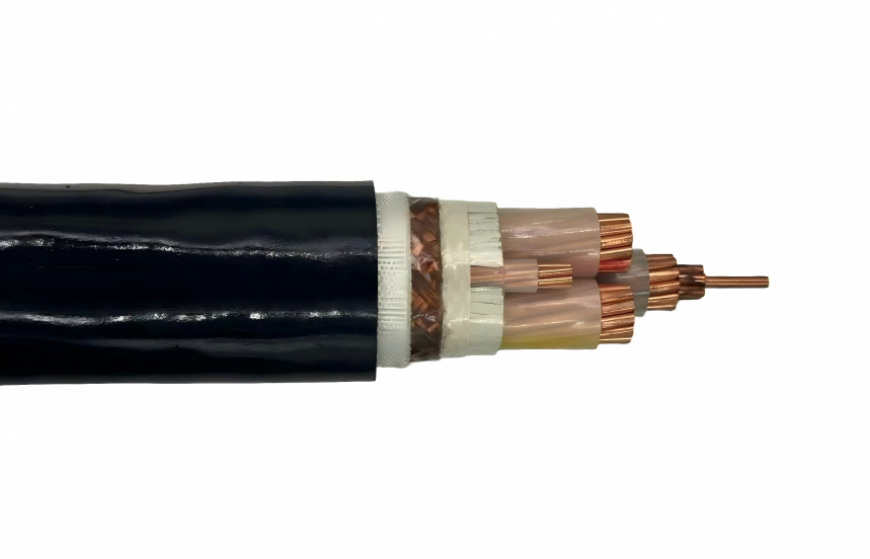
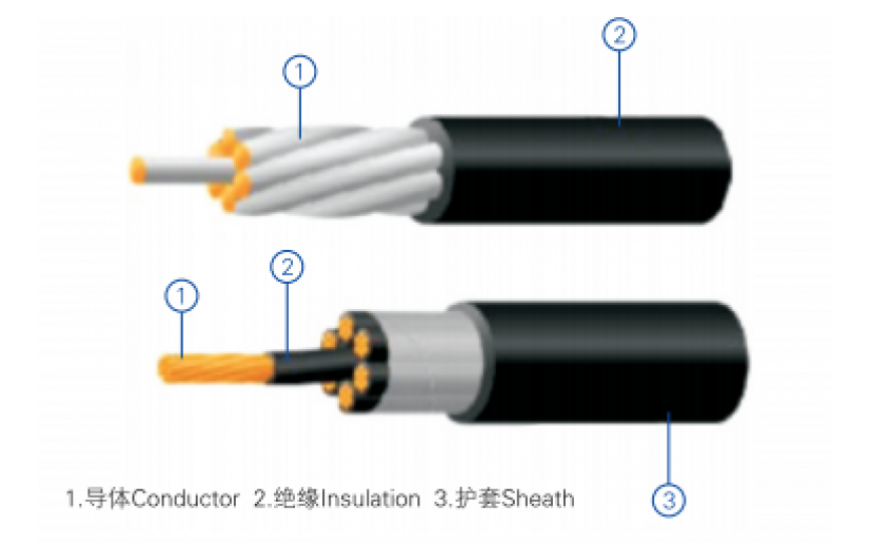
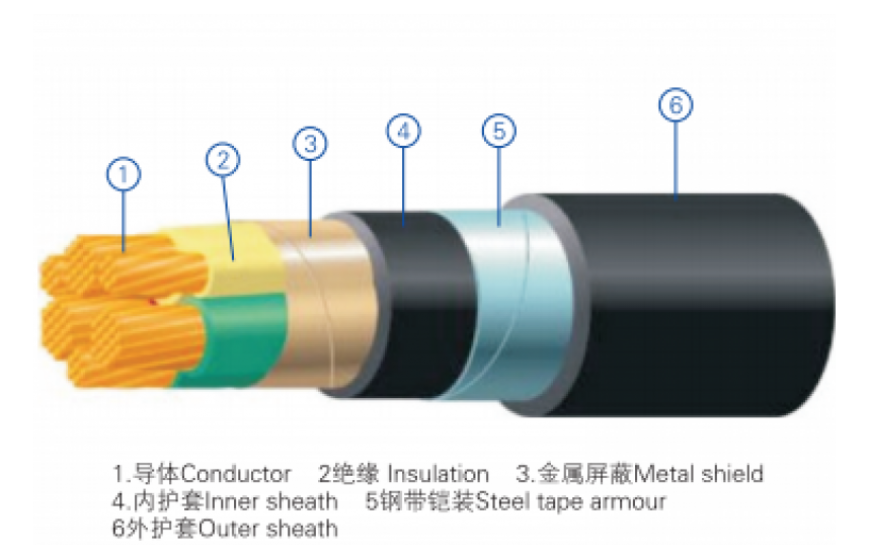
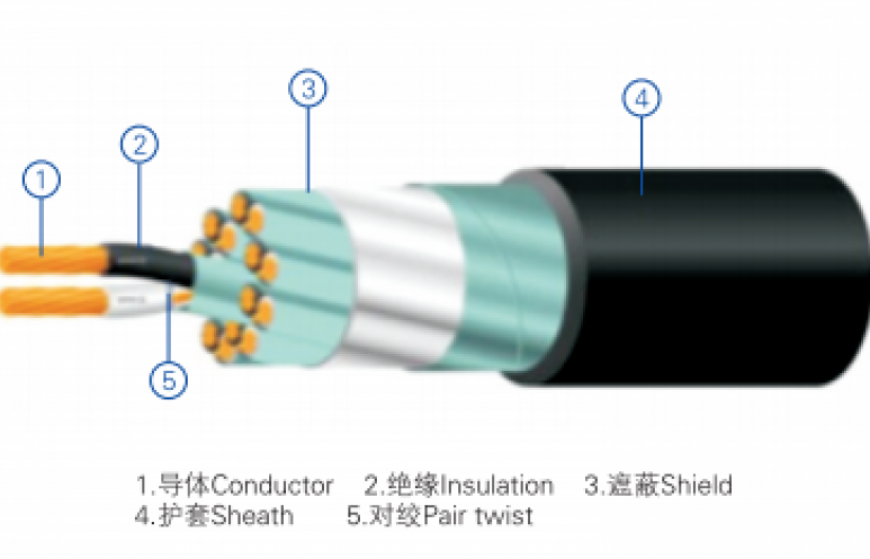
The cable features a compact and flexible multi-layer structure suitable for narrow onboard layout and long-term bumpy operation. The innermost layer is Class 5 finely stranded annealed tinned soft copper conductor; fine stranded design delivers outstanding flexibility against repeated bending, while the tin coating prevents copper oxidation under humid and oily onboard atmosphere, avoiding wire breakage and terminal overheating caused by prolonged vibration. A flame-retardant separating tape can be wrapped optionally to enhance heat insulation and fire barrier performance. The middle insulation layer is electron-beam cross-linked modified polyolefin available in 90℃ and 125℃ temperature grades, featuring compact texture, stable dielectric strength, ozone aging resistance, no cracking or shrinkage under cyclic temperature fluctuation. For multi-core cables, eco-friendly flame-retardant filler fills the gaps to maintain cable roundness and buffer mechanical stress from vehicle vibration. Cables for control circuits vulnerable to electromagnetic interference are equipped with copper wire braided or copper tape lapped shielding layers to block harmonic waves and electromagnetic noise generated by traction converters and high-power motors. The outermost layer is extruded with special LSZH sheath resistant to oil, fuel and low temperature; the dense impermeable structure resists engine oil, diesel, hydraulic oil and acid-base mist, with excellent wear and tear resistance.
Core Performance Advantages
Superior vibration and fatigue resistance enables stable operation under continuous vehicle bumping; no conductor breakage or insulation cracking occurs after repeated bending and long-term vibration. The small bending radius facilitates routing in narrow onboard bends and cabinet gaps for easy installation. It operates steadily from -40℃ extreme cold to 125℃ high temperature for fixed laying, adapting to frigid northern routes and sweltering southern carriages without embrittlement or softening under drastic day-night temperature alternation. Outstanding oil and fuel resistance prevents sheath swelling, peeling and damage after long-term exposure to lubricating oil, diesel and hydraulic oil, ideal for wiring in power compartments and bogies with heavy oil contamination. It meets stringent rail transit fire safety requirements; halogen-free low-smoke material delivers excellent bundled flame retardancy, generating minimal smoke and no toxic corrosive hydrogen halide gas during combustion. It ensures clear visibility for passenger evacuation in enclosed carriages and avoids corrosion to vehicle metal structures and precision onboard control equipment, complying with multi-level fire safety standards of EN 45545. The tinned copper conductor reduces voltage drop loss; shielded variants achieve bidirectional electromagnetic isolation, preventing traction system harmonics from disturbing onboard signal, communication and air conditioning systems and avoiding internal electromagnetic leakage. The insulation maintains stable electrical parameters throughout the vehicle service life with excellent ozone, UV and acid mist resistance for reliable external wiring on vehicle roofs and car bodies.
Application Scenarios
It is widely used for full-vehicle wiring of high-speed EMUs, intercity trains, conventional locomotives, urban subways and light rails; power supply circuits for traction systems, auxiliary power units, air conditioners, ventilation fans and water pumps; control cables for door operation, braking systems, interior lighting, onboard monitoring and signal transmission; shielded control cables around traction converters and high-voltage cabinets with intensive electromagnetic interference; wiring in oil-prone areas such as bogies and power compartments; outdoor exposed wiring on vehicle roofs and body surfaces; onboard power distribution systems for rail transit vehicles in frigid regions.