English
Cross-linked polyethylene insulated control cable
XLPE Insulated Control Cable
Product Introduction
The XLPE insulated control cable is mainly the KYJV series, rated at 450/750V. It complies with Chinese national standard GB/T 9330.3-2008 and international industrial standard IEC 60502. It is designed for relay protection, equipment start-stop interlock, loop monitoring and switching signal transmission in power, metallurgy, chemical and automated production systems. It connects control cabinets, field actuators, sensors and relays. Compared with conventional PVC insulated control cables, XLPE material achieves superior heat resistance, electrical stability, aging resistance, as well as tolerance to slight oil stains and dampness, which fits high-temperature workshops and densely arranged cable trays. Optional configurations including shielding, steel tape armor and LSZH flame-retardant structure can be selected to cope with electromagnetic interference, direct underground burial and fire safety requirements in enclosed spaces respectively.
Model Definition & Common Types
K stands for control cable; YJ refers to XLPE insulation; V means PVC outer sheath; P denotes tinned copper braided shield; P2 is copper tape wrapped overall shield; 22 represents steel tape armor; R stands for flexible conductor; JY refers to LSZH polyolefin sheath. KYJV is the basic type, applied to dry indoor cable trays and regular fixed laying without obvious electromagnetic interference. KYJVP is fitted with copper braided shield, used in areas around inverters and large motors with severe harmonic interference. KYJVP2 adopts integral copper tape shielding featuring stable shielding performance, more suitable for long-distance wiring. KYJV22 is equipped with steel tape armor, which is compression-resistant, impact-resistant and rodent-proof, available for cable trench laying, outdoor routing and direct burial underground. KYJVP2-22 combines shielding and armor structure, applicable to harsh environments with humid corrosive soil and strong electromagnetic interference. KYJVR and KYJVRP are flexible conductor versions, intended for internal cabinet wiring and occasions requiring slight bending and movement. WDZ-KYJY is the low-smoke zero-halogen environmental model, widely used in power stations, tunnels, high-rise buildings and other areas with strict fire protection standards. Common conductor cross-sections cover 0.5, 0.75, 1.0, 1.5, 2.5, 4, 6 and 10 mm², and the number of cores ranges from 2 cores to 61 cores for customized selection.
Internal Structure (From Inner to Outer)
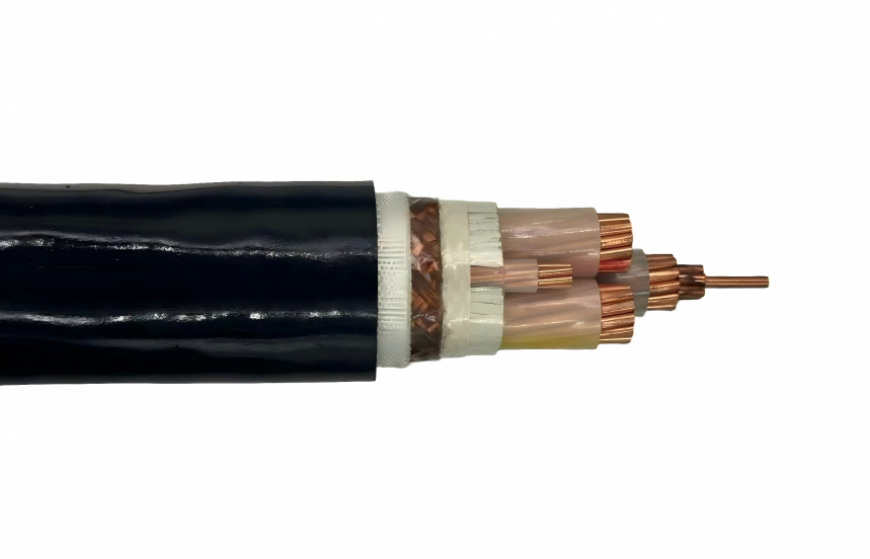
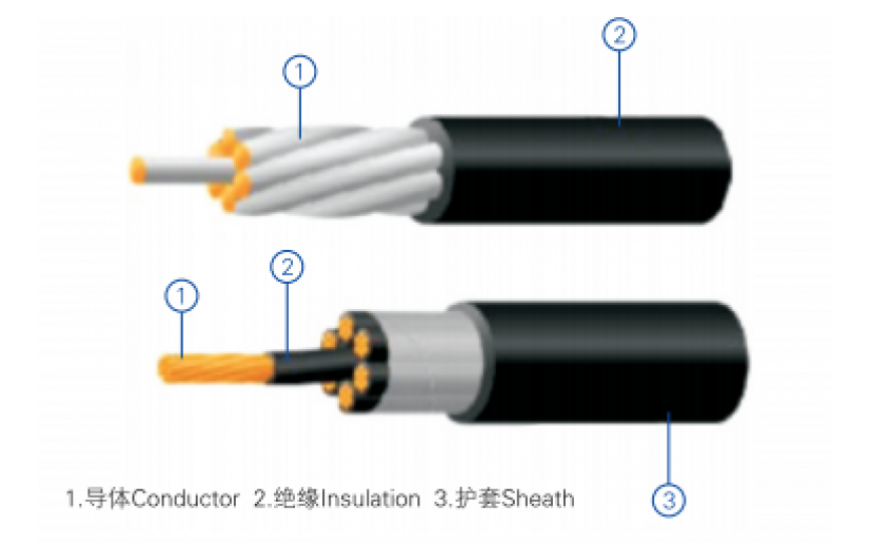
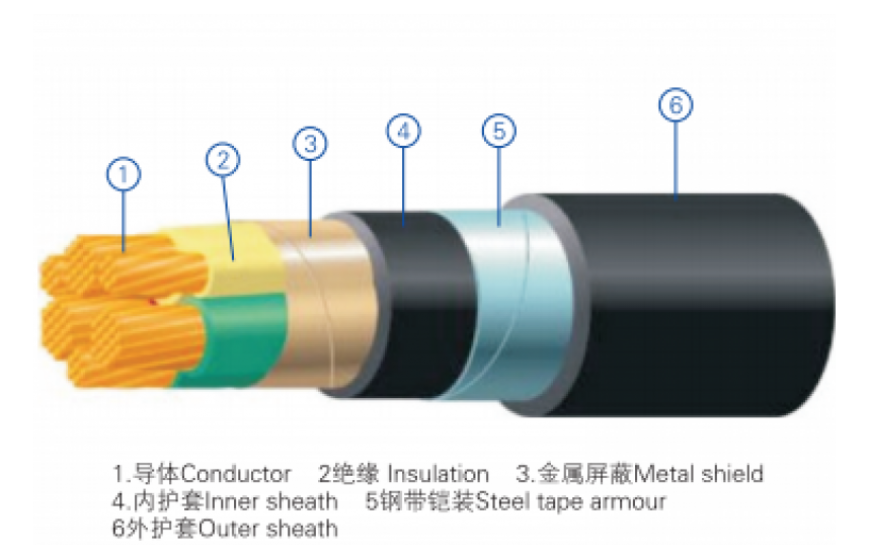
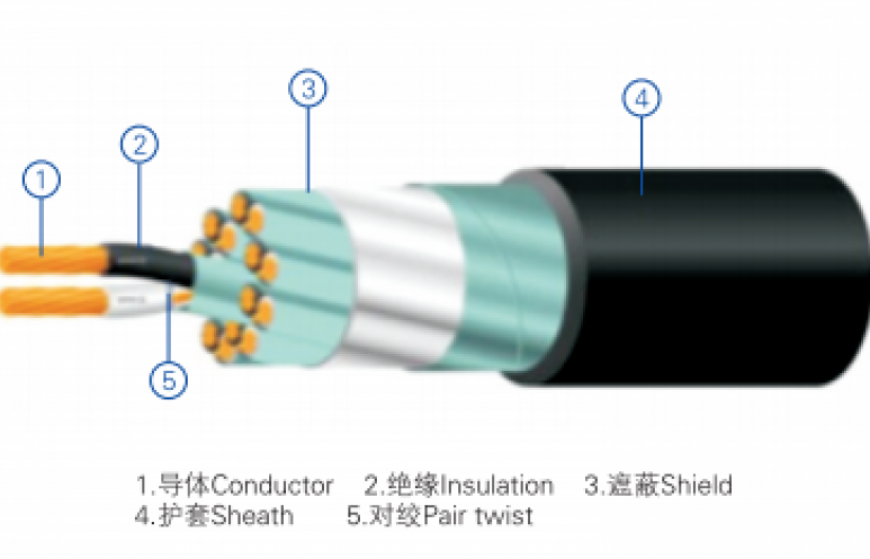
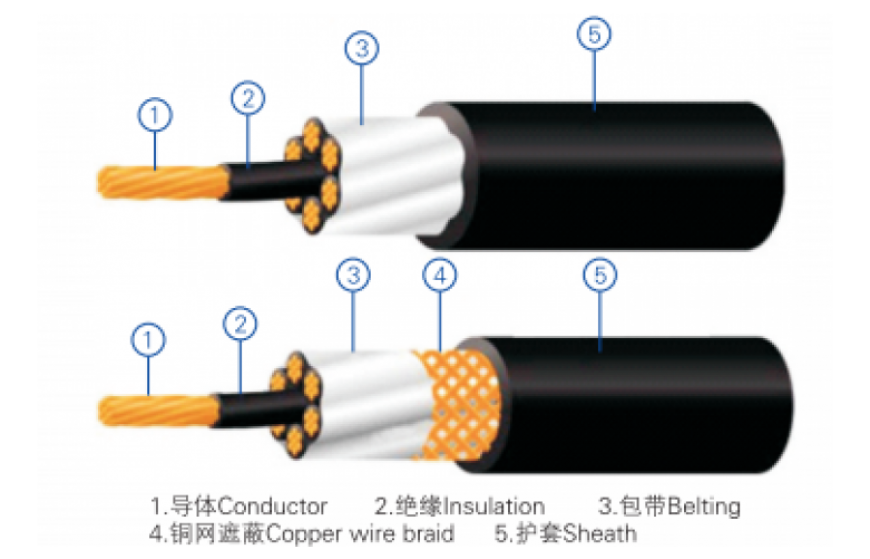
The innermost part is copper conductor. Class 2 compact stranded oxygen-free copper is adopted for fixed laying, delivering uniform resistance and negligible voltage drop in low-current control loops. Class 5 fine stranded flexible copper is used for working conditions requiring frequent bending. The conductor is tightly extruded with XLPE insulation layer. After cross-linking modification, it forms a stable reticular molecular structure, different from thermoplastic PVC. It can operate stably at a long-term temperature of 90℃, and withstand instantaneous high temperature up to 250℃ under short-circuit conditions. With low dielectric loss, excellent corona resistance and partial discharge resistance, it will not soften or shrink under high temperature, and the attenuation of insulation performance proceeds slowly. Multiple insulated cores are neatly stranded together. Flexible flame-retardant fillers fill the gaps to keep the cable round and regular, buffer extrusion stress and avoid mutual abrasion between cores. Shielding layer can be added for electromagnetic interference environments. Copper braided shield boasts high shielding efficiency to filter chaotic frequency conversion harmonics; copper tape wrapped shield features uniform arrangement and moderate cost, performing steadily for long-distance wiring. PVC or LSZH inner sheath is extruded outside the shielding layer for moisture resistance and buffering, isolating the shielding layer and armor structure. Double steel tape armor is wrapped for direct burial, compression resistance and rodent prevention, resisting soil extrusion, heavy object impact and rodent gnawing. The outermost layer is outer sheath. PVC material is adopted for general working conditions, which is wear-resistant, moisture-proof and resistant to mild acid, alkali and industrial oil stains. LSZH polyolefin sheath is used in enclosed fire-risk areas, generating thin smoke and no halogen-containing toxic corrosive gas in case of fire.
Key Technical Parameters
The maximum long-term allowable operating temperature of the conductor is 90℃; the minimum laying ambient temperature is 0℃, and fixed installation can endure low temperature down to -30℃. For bending radius requirements: non-armored cables shall be no less than 6 times the cable outer diameter; armored and shielded cables shall be no less than 12 times the outer diameter. The cable can withstand power frequency withstand voltage of 3kV for 5 minutes without insulation breakdown. It is applicable to AC control circuits below 450/750V, and the maximum DC operating voltage shall not exceed 1.5 times the rated AC voltage.
Core Performance Advantages
Far superior heat resistance compared with PVC insulated control cables The maximum continuous operating temperature of 90℃ brings higher current carrying capacity when cables are stacked and laid on trays. The cable hardly ages or cracks after long-term service in high-temperature workshops, and its overall service life is more than twice that of PVC cables.
Stable electrical operation It owns high insulation resistivity, and the dielectric loss will not rise sharply with temperature increase. With outstanding electric field impact resistance, control signals remain free from deviation, ensuring precise and reliable action of relay switching.
Wider environmental adaptability It can resist machine lubricating oil, cutting fluid, humid vapor, weak acid and alkali erosion, and can be used for a long time in humid underground environments and mildly corrosive workshops.
Comprehensive working condition adaptation By combining shielding, armor and LSZH structures, it can cover most industrial automation scenarios including indoor conventional wiring, industrial sites with strong interference, outdoor trench direct burial and tunnel fire protection projects.
Application Scenarios
Secondary relay protection circuits of thermal power plants and substations; equipment start-stop interlock and detection control lines for metallurgical, cement and chemical production lines; automatic control loops for water supply, drainage and flue gas environmental treatment equipment; control wiring for central air conditioning and building electromechanical equipment; control circuits for ventilation and smoke exhaust equipment in tunnels and underground utility tunnels; connecting cables between PLC control cabinets and on-site valves and sensors.